Raising Bilingual Children When One of the Languages Is Finnish
Every family raising a child in two languages hears the same warning from someone’s aunt: the poor thing will get confused. Decades of research say otherwise. Bilingual children sort their languages out early, code-switch on purpose rather than by accident and gain a set of cognitive perks along the way. The confusion, it turns out, belongs mostly to the adults. What is true is that raising a bilingual child takes deliberate effort, and when one of the languages is Finnish, spoken by some five and a half million people and encountered almost nowhere by accident, the effort is the whole game.
Why Finnish is the hard mode of bilingualism
A child growing up abroad with Spanish or French will meet the language in cartoons, classmates and cereal packaging. A child growing up in Manchester or Minneapolis will meet Finnish exactly where you provide it and nowhere else. There is no ambient exposure, no Finnish-speaking kid two doors down and no algorithm serving up Pikku Kakkonen unless you point it there yourself. Add a grammar with fifteen cases and a vocabulary that shares almost nothing with English, and the majority language will happily swallow the minority one by about age seven unless somebody holds the line.
What actually works
The research on raising bilingual children keeps returning to the same few principles, and Finnish families abroad have been field-testing them for generations.
Pick a system and be boringly consistent. The classic is one parent, one language: the Finnish-speaking parent speaks only Finnish to the child, always, including in front of guests who understand nothing. The alternative is minority language at home, where the whole household runs on Finnish and the child gets the majority language from everywhere else. Both work. Switching systems every few months does not.
Make the language useful, not homework. Children learn languages when the language does something they care about. Video calls where mummi only understands Finnish, a Finnish-only game night and songs in the car do more than drilling ever will. The moment Finnish becomes a chore, a small negotiator will inform you that everyone at school speaks English and rest their case. And if you are the non-Finnish parent trying to keep pace, a grounding in the fundamentals of Finnish yourself makes those game nights a good deal less one-sided.
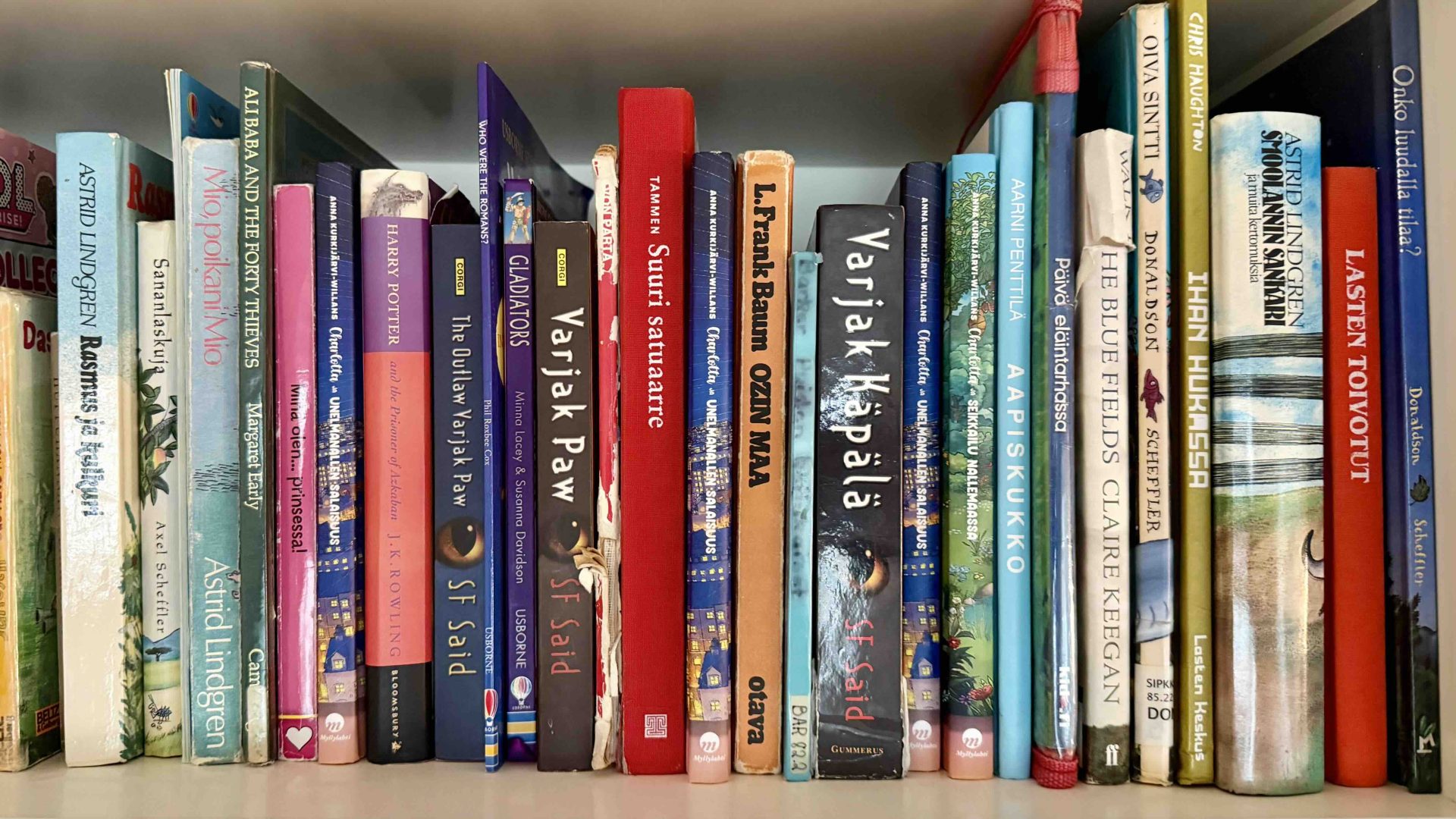
Read to them in Finnish, then keep reading. Books carry the vocabulary daily conversation never touches. Dinner-table Finnish covers about six hundred words of food, weather and bedtime, while books carry adventure, villainy, feelings and the conditional mood. Actual Finnish children’s literature, the kind written for Finnish kids rather than for learners, is the single best tool a family abroad has, because a child who wants to know what happens next is a child voluntarily consuming the fifteen cases. New releases matter here: a story a child chooses beats a worthy classic a parent assigns, which is why books like Charlotta ja Seikkailu Nallemaassa, a new teddy-bear adventure novel for ages 6 to 10, earn their place on the shelf next to the Lindgrens.

Find the Saturday school. Suomikoulu, the network of Finnish Saturday schools, operates in dozens of countries and does two things no family can do alone: it gives the child other kids who speak Finnish, and it makes the language a normal social fact rather than a family quirk. The Finnish Schools network and local Finland Societies will know the nearest one.
The long game
There will be a phase, usually around school age, when the child answers Finnish questions in English. Nearly every bilingual family hits it, and the families that come out the other side are the ones who keep speaking Finnish anyway, without drama, until the child’s Finnish catches up with their life. Passive understanding is not failure but foundation: plenty of diaspora kids who mumbled through their teens came back to fluency the first summer they fell in love with someone at a Finnish festival.
And the payoff is larger than a CV line. A child who speaks Finnish can know their grandparents without subtitles, sit in a summer cottage silence and understand it, and read what Finland writes for its own children rather than what it exports. For families keeping the language alive abroad, signed Finnish children’s books shipped from Helsinki exist precisely for this, and the shelf, as any Finn will tell you, is where the language stays warm through winter.


